

A residential lease in Turkey does not end just because its term expires. If the tenant keeps paying, the lease renews automatically, and the landlord can only end it on a ground set out in the Turkish Code of Obligations. Each ground has its own deadline, and a missed deadline usually means waiting another full lease year.
The grounds in more detail
The landlord needs the property
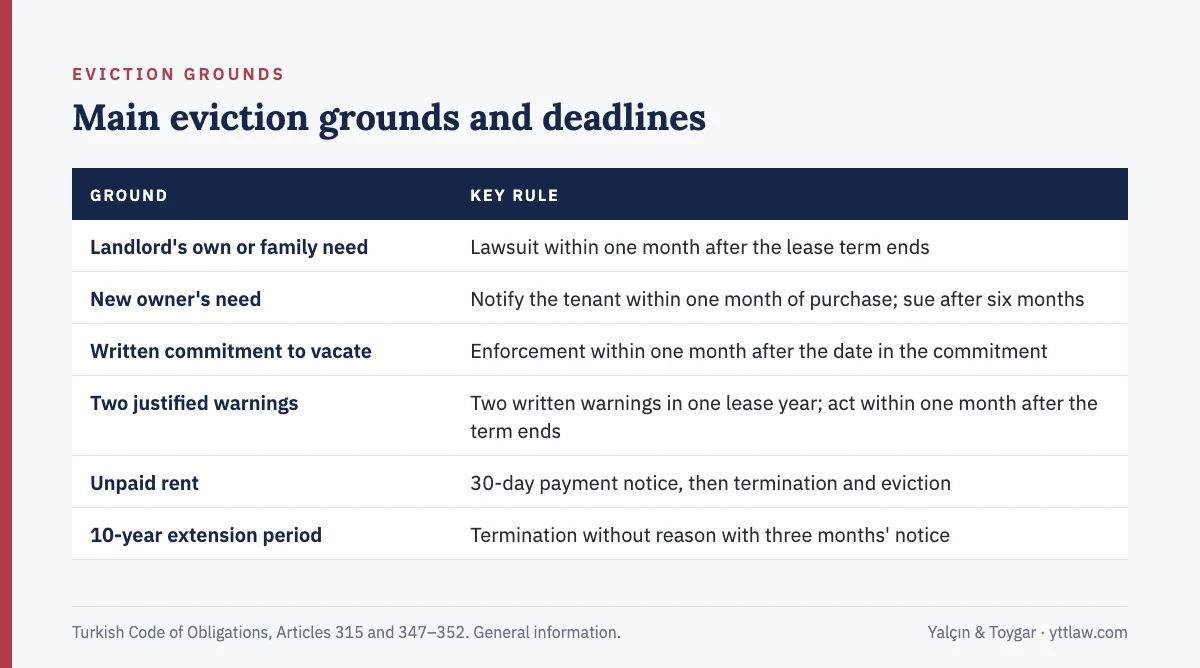
The landlord can end the lease if they, their spouse, children, parents or others they must support need the home for themselves. The need must be real and continuing. The lawsuit is filed within one month after the end of the lease term. A landlord who evicts on this ground cannot rent the property to someone else for three years without a valid reason.
A new owner needs the property
Someone who buys a rented home can rely on their own need. They must notify the tenant in writing within one month of the purchase and can file the eviction case after six months.
Commitment to vacate
A written commitment by the tenant to leave on a certain date is valid only if it was signed after the tenant moved in. A commitment signed together with the lease is usually challenged. The landlord must act within one month after the date in the commitment.
Two justified warnings
If the tenant pays late and the landlord sends two written warnings within one lease year, the landlord can file for eviction within one month after that lease year ends.
Unpaid rent
For residential leases, the landlord gives the tenant at least 30 days to pay and warns that the lease will be terminated. If the rent is still unpaid, the landlord can terminate and seek eviction, either through the courts or through the enforcement office.
Mediation first
Since 1 September 2023, most disputes about leases, including many eviction claims, require mediation before a lawsuit can be filed. Eviction through the enforcement office for unpaid rent follows its own procedure. See mandatory mediation in Turkey.
For tenants
A tenant who receives an eviction notice should check which ground the landlord relies on and whether the deadline was met. Rent increases follow separate rules; see rent increase rules in Turkey.
For our services in this field, see our real estate law page.
Frequently asked questions
No. For residential leases, the lease renews automatically if you keep paying. The landlord needs a legal ground, or must wait until the 10-year extension period has passed.
A commitment signed at the same time as the lease is generally not considered valid. It must be signed after the tenant has taken possession of the property.
It depends on the ground and the court’s workload. Mediation comes first in most cases, and a contested case can take many months.
No. Eviction must go through mediation, the courts or the enforcement office. Self-help measures can lead to criminal and civil liability.
This article is for general information only and does not constitute legal advice. Every case depends on its own facts; please consult a lawyer about your situation. Last reviewed: November 2026.