

Short answer: If a cheque bounces in Turkey, the bank records the non-payment on the cheque and pays the holder a statutory minimum amount set each year. The holder can then start fast-track enforcement proceedings for the rest. The issuer faces a judicial fine and a ban on issuing cheques unless the debt is paid. These rights depend on presenting the cheque within the legal period.
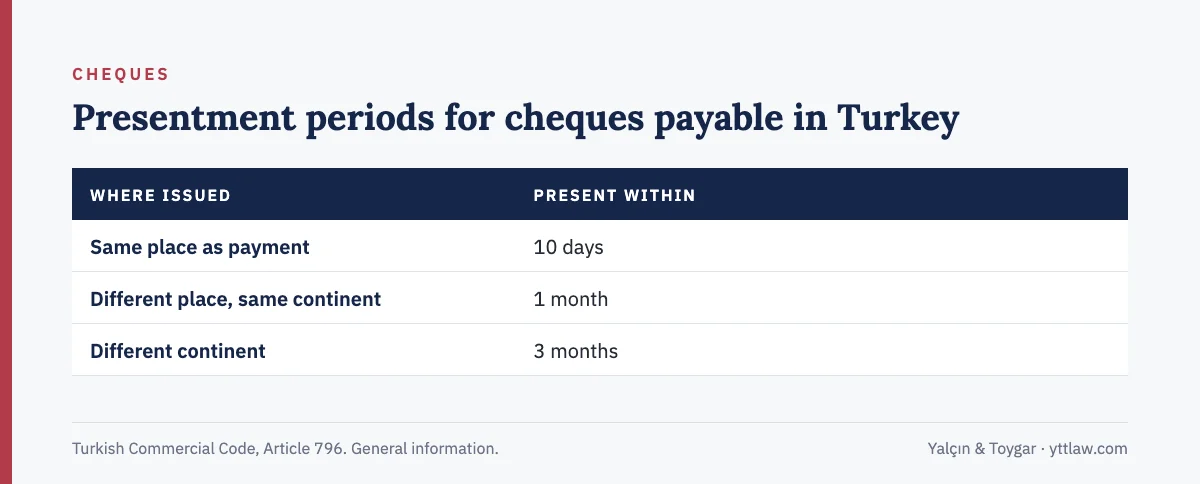
Presentment
A cheque is payable at sight. If it is presented before the date written on it, it is still paid on the day of presentation. Presenting late can cost the holder its recourse rights against endorsers, so watch the periods in the table.
When the account has no funds
- The bank notes on the cheque that it was not paid. This record replaces a formal protest.
- The bank pays the holder up to the statutory liability amount for each cheque, which is updated every year.
- The holder can start enforcement proceedings specific to negotiable instruments for the balance. These are faster than ordinary enforcement, and the debtor has short periods to object.
Criminal consequences for the issuer
Under the Cheque Law, issuing a cheque that bounces can lead, on complaint, to a judicial fine and a ban on opening cheque accounts. Paying the debt with interest and costs can remove or reduce these consequences.
For foreign traders accepting Turkish cheques
- Check the issuer through the bank’s cheque reports before accepting post-dated cheques.
- Keep the original cheque; enforcement requires it.
- Do not wait: present on time and start enforcement promptly.
See also how to recover a debt from a Turkish company.
Frequently asked questions
A cheque is payable at sight. If it is presented before the written date, it is paid on the day of presentation, subject to funds.
The bank pays up to a statutory liability amount per cheque, updated each year. The rest is collected from the issuer and endorsers.
It can lead to a judicial fine and a ban on cheque accounts, on the holder’s complaint. Payment of the debt can remove these consequences.
You may lose recourse against endorsers, but a claim against the issuer may still be possible. Get advice on the specific cheque.
This article is for general information only and does not constitute legal advice. Every case depends on its own facts; please consult a lawyer about your situation. Last reviewed: November 2026.